
Description
Natural Baan Linga (Banalinga) Shiva Lingam – Sacred Narmada Stone
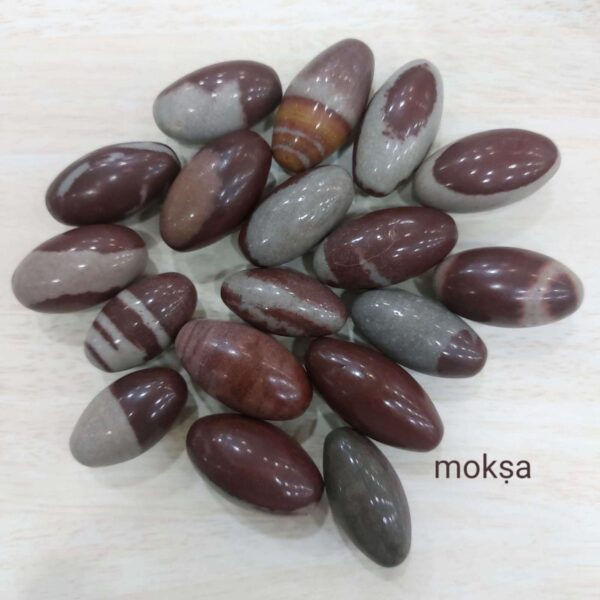
The Natural Baan Linga, also known as Banalinga or Narmadeshwar Shiva Lingam, is one of the most sacred naturally formed stones in Hindu tradition. Unlike carved Shivlings, Banalingas are naturally shaped over thousands of years by the continuous flow of the holy Narmada River, making each one truly unique.
Traditionally regarded as a natural manifestation of Lord Shiva, the Banalinga is worshipped in homes, temples, and sacred spaces across India. Its smooth oval form, created entirely by nature, symbolizes the infinite cosmic energy of Shiva and represents creation, balance, transformation, and spiritual consciousness.
Every Banalinga carries its own natural colours, patterns, and markings, making each piece a one-of-a-kind creation of nature.
What is a Baan Linga?
A Baan Linga (Banalinga) is a naturally polished cryptocrystalline stone found in the bed of the sacred Narmada River in Madhya Pradesh, India. Over centuries, the flowing river naturally shapes these stones into their characteristic smooth, elliptical form.
Unlike manufactured or carved Shivlings, a Banalinga is naturally formed, making it especially revered for worship and spiritual practices.
Spiritual Significance
The Banalinga has been worshipped for centuries as a sacred symbol of Lord Shiva. In Hindu philosophy, it represents:
- The infinite nature of the Divine
- Creation, preservation, and transformation
- Cosmic consciousness
- Inner peace and spiritual awakening
- Harmony between Shiva and Shakti
- Devotion and self-realization
Many devotees perform daily Abhishek (ritual bathing), mantra chanting, and meditation with a Banalinga as part of their spiritual practice.
Traditional Spiritual Beliefs
According to traditional beliefs, the Banalinga is associated with:
- Deep meditation
- Spiritual discipline
- Inner stability
- Devotional practices
- Positive vibrations in sacred spaces
- Strengthening prayer and mantra practices
- Creating a peaceful atmosphere for worship
These beliefs are rooted in spiritual traditions and cultural practices and are not scientifically proven.
Vedic Spiritual Association
In Vedic tradition, the Banalinga is regarded as one of the most auspicious forms of Shiva worship. It is commonly placed in:
- Home temples
- Meditation rooms
- Ashrams
- Yoga spaces
- Spiritual centres
- Sacred altars
Many devotees worship the Banalinga during Mahashivratri, Shravan month, Pradosh Vrat, Mondays dedicated to Lord Shiva, and other auspicious occasions.
Vastu & Feng Shui Beliefs
Traditionally, a Banalinga is believed to symbolize:
- Spiritual harmony
- Positive energy
- Peaceful surroundings
- Divine blessings
- Sacred vibrations
Many people place it in a clean and respectful location reserved for prayer and meditation.
Perfect For
- Daily Shiva Puja
- Home Temple
- Meditation Practice
- Yoga Studios
- Spiritual Seekers
- Devotees of Lord Shiva
- Sacred Altars
- Religious Gifting
- Housewarming Gifts
- Festival Gifts
- Mahashivratri Celebrations
Care Instructions
- Handle with care and respect.
- Wash with clean water before worship if desired.
- Clean gently with a soft cloth.
- Avoid harsh chemicals or abrasive cleaners.
- Store in a clean and sacred place when not in use.
Product Features
- Genuine Natural Banalinga Stone
- Naturally Formed by the Narmada River
- Sacred Symbol of Lord Shiva
- Smooth Natural Finish
- Ideal for Puja and Meditation
- Every Piece is Naturally Unique
- Suitable for Home Temples and Spiritual Spaces
- Includes 1 Natural Banalinga
Why Choose Moksa Crystals?
- Carefully Selected Sacred Stones
- Genuine Natural Banalingas
- Secure Packaging
- Trusted Spiritual & Crystal Store
- Ethically Sourced Products
- Ideal for Devotional and Spiritual Use
Disclaimer
This product is a naturally occurring sacred stone intended for spiritual, religious, decorative, and collectible purposes. References to Vastu, Feng Shui, astrology, spiritual benefits, or metaphysical properties are based on traditional beliefs, scriptures, and cultural practices. They are not scientifically proven and should not be interpreted as medical, psychological, or professional advice.
Reviews
There are no reviews yet.